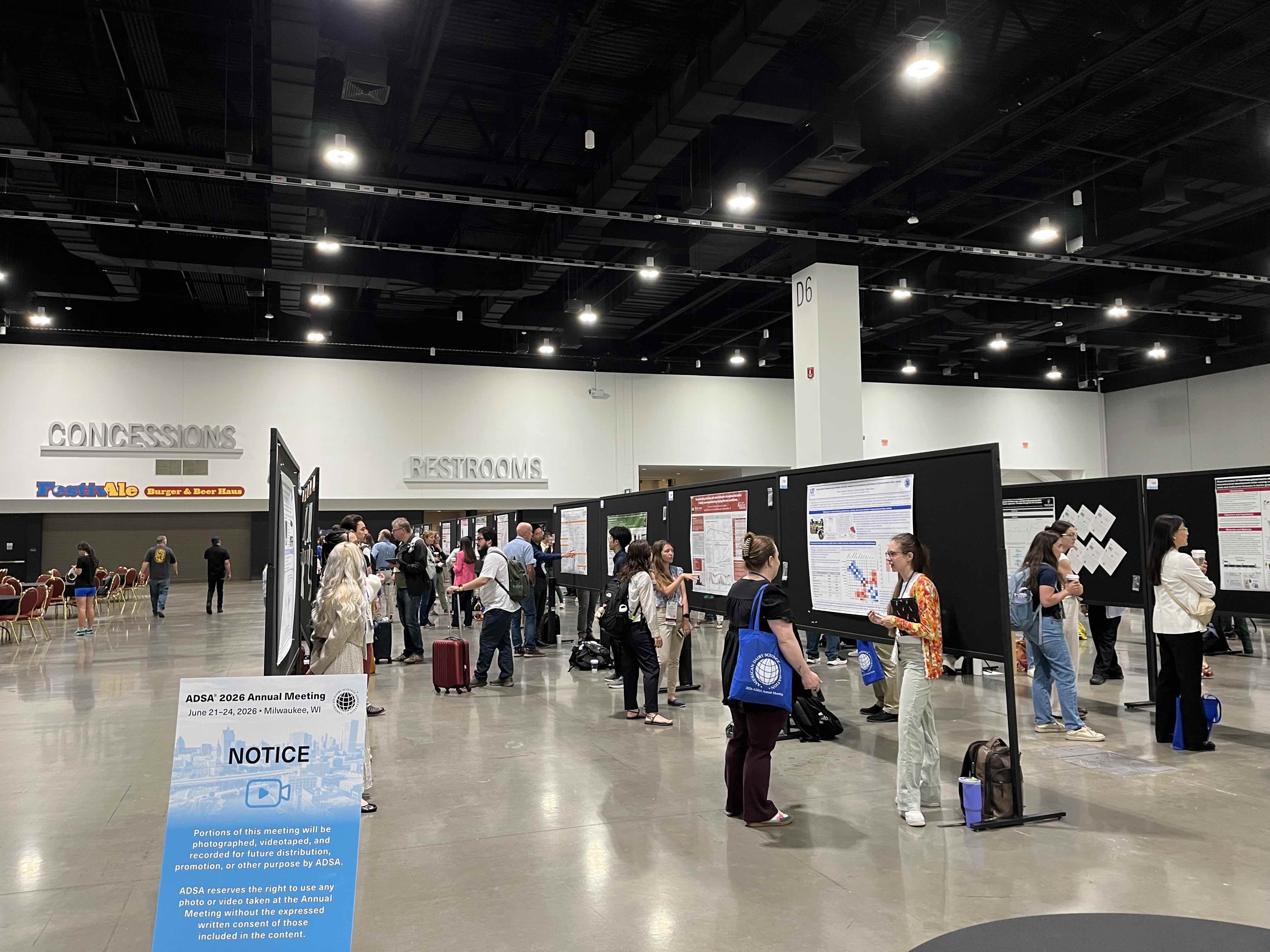
Last month, Dr. Hsueh-lui Ho, Global Technical Manager – Feed Additives, and Dr. Mark Leggett, Head of R&D and Technical, attended the 2026 American Dairy Science Association (ADSA) Annual Meeting in Milwaukee, Wisconsin, joining researchers, nutritionists and industry professionals from around the world to explore the latest developments in dairy science.
ADSA remains one of the world's leading dairy research conferences, bringing together delegates from academia and industry to showcase studies at every stage of development from early exploratory work to established, peer-reviewed research. Covering topics from transition cow management and animal nutrition to forage production, milk quality and even the science behind producing the perfect cheese, the event provided valuable insight into the future of the dairy industry.
Reflecting on the conference, Dr. Hsueh-lui Ho highlighted several themes that stood out throughout the week, ranging from the growing role of artificial intelligence in dairy nutrition to the continued focus on inflammation, heat stress and emerging areas of new research in either well described nutrition interventions or greenhouse emissions. Alongside the scientific programme, the conference also provided an excellent opportunity to strengthen collaborations with existing research partners, establish new connections with leading academics and exchange ideas with experts from across the global dairy industry.
Inflammation continues to gain attention
One of the most prominent themes throughout ADSA 2026 was the growing understanding of inflammation and its impact on dairy cow productivity.
"There were numerous studies investigating inflammation and different approaches to support animal health and performance," explained Hsueh-lui. "It was clear that this remains an important area of research, particularly as the industry continues to explore new nutritional and management strategies to support cows through periods of challenge."
Several presentations also explored alternatives to traditional anti-inflammatory approaches, reflecting the continued search for practical, evidence-based solutions that support animal health and productivity.
Heat stress remains a global priority
Heat stress continued to feature heavily across the conference, reflecting its ongoing importance for dairy producers around the world.
Researchers presented a range of studies investigating how heat stress affects cow health, welfare and productivity, alongside nutritional interventions designed to help animals better cope with increasingly challenging environmental conditions.
Improving milk quality through nutrition
Milk composition was another key area of discussion, particularly the role of nutrition in increasing milk protein while maintaining the optimum balance between protein and fat.
"There was a lot of discussion around nutritional interventions to increase milk protein," said Hsueh-lui. "An interesting point raised was that milk fat levels in the US have increased so successfully in recent years that achieving the correct protein-to-fat ratio has become increasingly important for cheddar cheese production. This is driving greater interest in nutritional strategies that can improve milk protein content."
While sustainability remained an important topic, Hsueh-lui noted there was comparatively less emphasis on emissions reduction than at previous ADSA conferences, with greater focus placed on animal health, productivity and milk quality.
Artificial intelligence is transforming dairy research
Artificial intelligence featured prominently across multiple presentations, highlighting how rapidly digital technologies are being adopted within dairy production.
Some of the most exciting applications included using AI to predict how live yeast products perform when fed alongside different forage diets, helping nutritionists formulate more effective rations.
Researchers also demonstrated how AI can integrate soil, weather and farm management data to optimise nutrient application, planting dates and crop management decisions, particularly in maize production. These examples highlighted AI's growing potential to improve decision-making both in the field and within the dairy herd.
Emerging research to watch
Alongside established areas of research, several developing topics generated considerable interest.
One particularly interesting discussion centred on PFAS, often referred to as "forever chemicals". Researchers explained that increasing research efforts are now focusing on understanding whether these compounds are present in forage and how they may enter the food chain through milk and meat.
Another developing area of interest is work taking place in the Netherlands, where researchers are investigating whether reducing crude protein in dairy diets can help lower emissions without compromising milk production or milk quality. Initial farm trials are currently underway, and the results could have important implications for future feeding strategies.
The conference also showcased advances in laboratory models for studying rumen acidosis, alongside improved DNA extraction methods for analysing rumen microbial populations.
Following on from presentations at the BISAS Annual Conference earlier this year, it was also encouraging to see partner laboratories involved in the same collaborative research grant presenting their latest work at ADSA.
Making better use of dairy data
Alongside the scientific sessions, Hsueh-lui and Mark attended workshops covering dairy herd data and statistical analysis for animal trials.
One workshop explored how increasingly sophisticated herd management data can support better on-farm decision-making while highlighting the challenges of interpreting information generated by different software providers, each using their own calibration models.
A second workshop provided a valuable refresher on statistical analysis and reinforced the importance of selecting appropriate models and interpreting research findings correctly.
"One of the most useful reminders was that a non-significant p-value doesn't prove there is no effect—it simply means there isn't enough evidence to detect one," Hsueh-lui reflected. "It was also a good reminder that the more questions you ask of a dataset, the greater the risk of false positives. Robust study design and simple, well-planned analysis remain incredibly important."
Strengthening collaborations
Beyond the conference sessions, ADSA provided an excellent opportunity to reconnect with existing collaborators, including Professor Jeff Firkins from The Ohio State University, while also meeting potential future collaborators such as Dr Kevin Harvatine from Penn State University.
It was particularly rewarding to see collaborative research involving The Ohio State University presented during the conference, demonstrating the value of strong partnerships between academia and industry in advancing dairy nutrition research.
Another highlight was exploratory research presented by graduate student Molly Cordonnier from The Ohio State University, investigating the potential of phytogenics to help mitigate methane emissions. The work reinforced the importance of dose-response studies when evaluating phytogenics and their effects on rumen microflora populations, helping advance understanding of sustainable dairy nutrition solutions.
More than just science
While the conference programme was packed with scientific discussion, ADSA also provided plenty of opportunities for networking.
"The famous ADSA ice cream breaks are always a highlight," Hsueh-lui said. "They're a great opportunity to catch up with colleagues from around the world while sampling delicious ice cream."
Outside the conference, the team also enjoyed exploring Milwaukee's vibrant food market, sampling cuisine from a variety of cultures and experiencing some of Wisconsin's well-known craft beer.
Looking ahead
Reflecting on ADSA 2026, Hsueh-lui believes the conference reinforced several important trends that will continue to shape the dairy industry.
"Artificial intelligence, inflammation, heat stress and milk quality continue to dominate discussions, while emerging areas such as PFAS research are beginning to gain momentum. ADSA remains an invaluable opportunity to exchange ideas, strengthen collaborations and stay at the forefront of dairy science."
As the dairy industry continues to evolve, events such as ADSA play a vital role in bringing together researchers, industry and producers to share knowledge, foster innovation and translate the latest science into practical solutions for dairy farmers around the world.