Farmers are being urged to take a preventative approach to mycotoxin management to protect herd performance following findings which identified the toxins in over 90% of feed and forage samples.

776 animal feed and forage samples were tested in the UK & Ireland in 2025 as part of Volac’s Mycocheck service, with 93.2% of those positive for one or more mycotoxin.
Mycotoxins are produced by certain moulds which can grow on bought-in feeds and home-grown silages. These invisible toxins have wide-ranging effects including reduced feed efficiency, suboptimal yields, poor fertility and mastitis.
Mycocheck tests for 31 different mycotoxins and assigns a risk score to each based on how likely they are to impact the cow so mitigation strategies can be put in place.
Rob Furmage, Scientific Services Manager for Volac says the results show that mycotoxins could be “silently eroding profits” on many farms.
“The data is quite stark and highlights that nearly all farms could be facing a hidden mycotoxin challenge,” he explains. “Even at low levels they can cause depressed milk yields, you might not even know cows could be achieving more. With low milk price, farmers can ill-afford any drain on performance.”
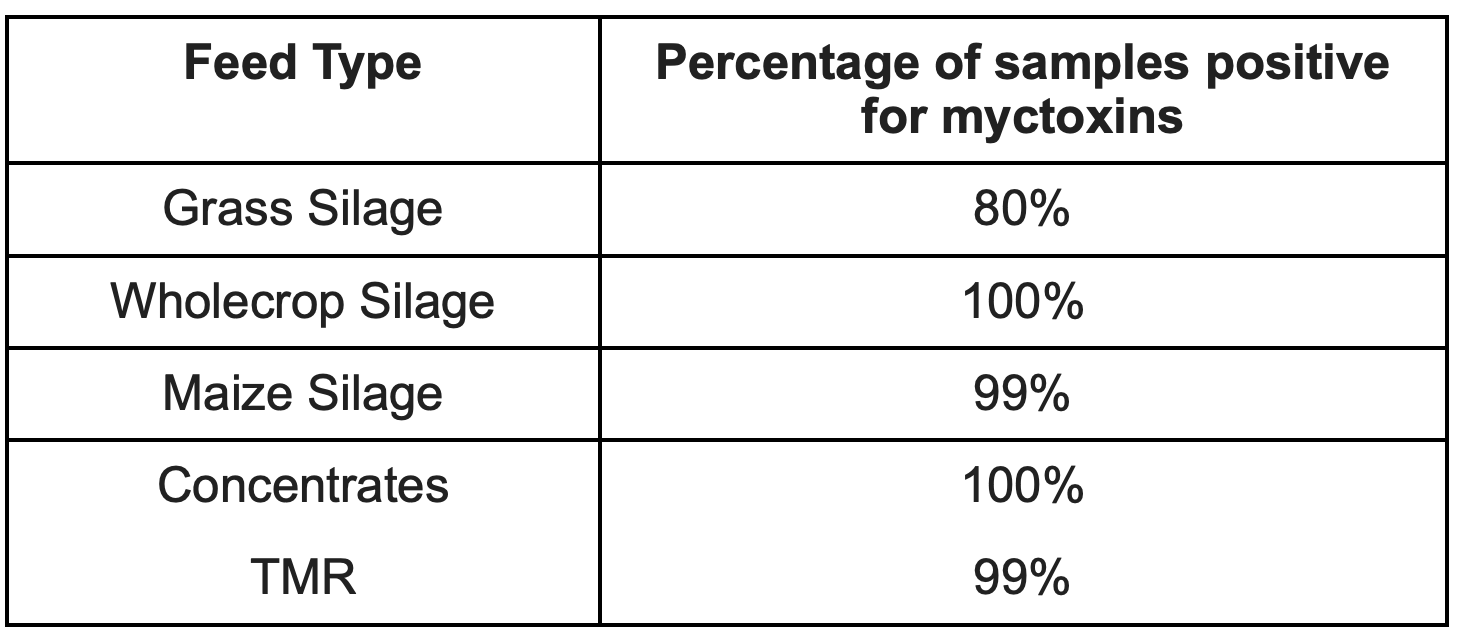
Wholecrop and concentrates were found to be particularly high risk with 100% of samples testing positive, followed by 99% of maize silage samples (see table).
Deoxynivalenol (DON) and Zeralenone (ZON) mycotoxins, which are produced by Fusarium moulds, were found most frequently (71% and 49% of samples respectively). Both have wide-reaching impacts, for example DON can cause immunosuppression or immunostimulation, whilst ZON can lead to reduced fertility.
The results also highlight the variability in mycotoxin risk both within the same year and between farms. Analysis showed that various high risk geographical “hot spots” emerged through the year, which could have been linked to buying-in high risk imported maize-based feeds or environmental stress in a particular region, for example. Mr Furmage says it underlines the unpredictability of mycotoxins.
“Not all moulds will produce mycotoxins, but a mould is more likely to produce a mycotoxin if it is stressed. That means they can rapidly become an issue, for example very wet or very hot weather might trigger them. This means herd challenge can very quickly escalate leading to herd level issues such as poor fertility and reduced feed intakes,” he explains.
This underlines the value of taking a preventative approach and including the triple-action mycotoxin remediator and endotoxin binder, Ultrasorb in diets at feed-out.
“Unlike a straight clay binder which simply binds a small number of mycotoxins, Ultrasorb binds, transforms and degrades a wider range using a combination of specifically selected clay binders, yeast fractions and biological active agents. This makes it effective against mycotoxins that are difficult to bind such as DON and ZON,” Mr Furmage explains.
It is available through Trident MicroNutri in the UK and can be incorporated into the diet in multiple ways including in blends, minerals or as part of a farm pack.
Mr Furmage adds: “Any drop in milk production because of mycotoxin challenge can be hugely costly and take time to recover compared to feeding Ultrasorb preventatively which costs pennies per cow per day. It’s a no brainer, particularly in the current market.”
With mycotoxins detected in 93.2% of feed and forage samples tested, the findings highlight the scale and unpredictability of the challenge facing UK and Irish dairy farmers. Testing feeds through Mycocheck can help identify the specific risks present, while taking a preventative approach with products such as UltraSorb can help protect herd performance, milk yield and cow health before problems become costly.